
Indoor Garbage Bins Helper: Pickup Day Prep, Sorting Station Setup and Calendar Checks
An indoor garbage bin does not have its own collection day. It is the home sorting station before waste moves to a curbside cart, green bin, blue box, building bin room, depot box or private-hauler container. Use this guide to set up the right indoor bins, avoid smell and contamination, and then confirm pickup through your official local calendar.
Quick Answer: Indoor Bins Help Sorting, Not Pickup Scheduling
Indoor bins are not official collection containers unless your building, municipality or hauler specifically says so. They are temporary sorting containers. Your actual pickup day comes from your local city, region, district, building manager, strata, landlord or private hauler.
“What day is pickup?”
Search your official local collection calendar by exact address. Do not rely on a generic indoor bin article, colour label or neighbour’s cart.
“Which indoor bin?”
Use separate indoor spots for food scraps, recycling, true garbage and depot-only items. Clear labels work better than colour alone.
“Where does it go next?”
Move material from the indoor bin to the outdoor cart, shared building bin, green bin room, depot box or special drop-off route before collection day.
Put the food-scrap pail and recycling spot closer to the prep counter than the garbage bin. If garbage is the easiest option, most households will overuse it.
Screenshot Guide: Where the Indoor Bin Setup Belongs in the Process
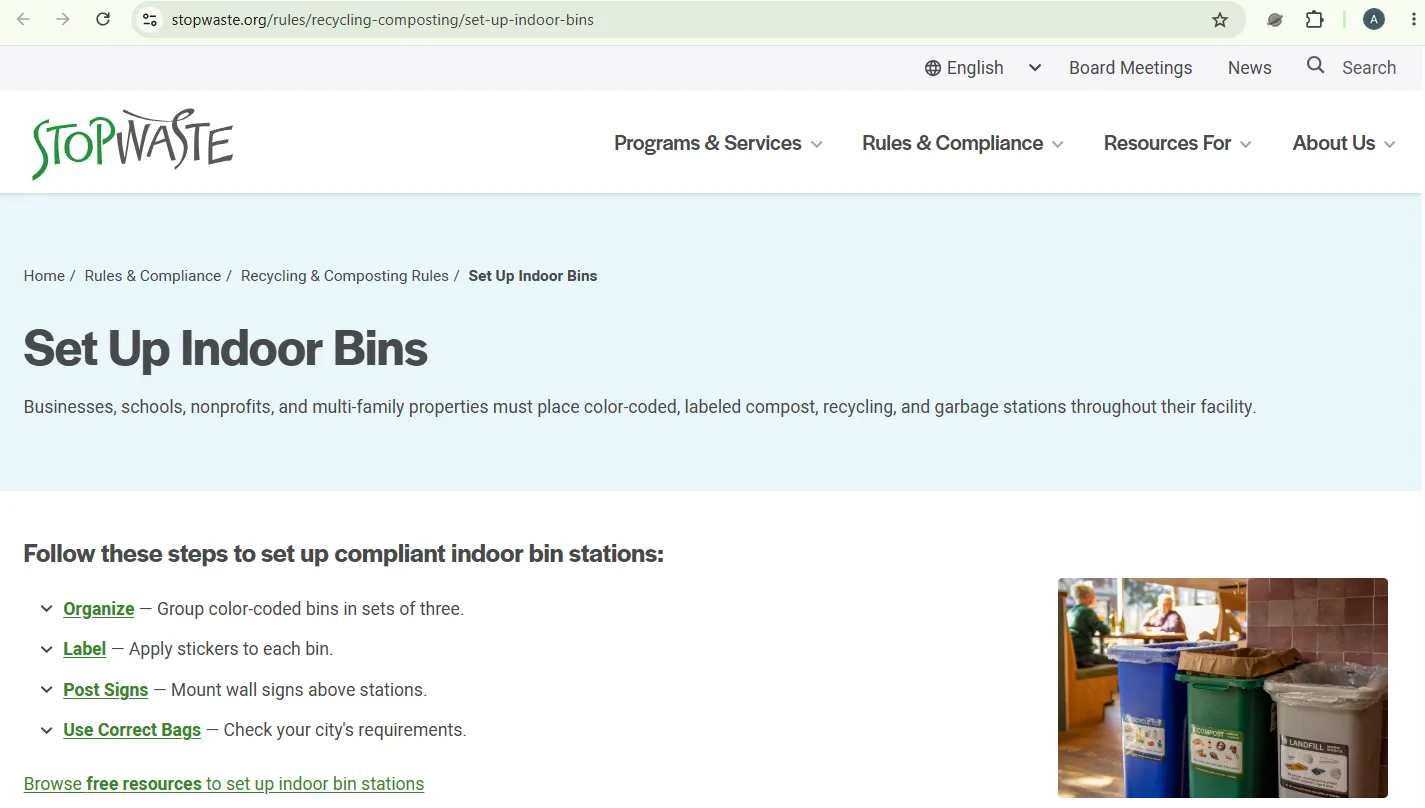
This screenshot is placed here because it supports the key action: setting up indoor bins before checking the pickup calendar. It is a visual reference for household sorting, not a live pickup-status proof.
📅 Which Week Am I On? — Garbage or Recycling?
160+ Canadian cities · CSS animated bins · Monthly calendar · Holiday warnings
City not in our database yet
We don't have a reference date for this city. To find your biweekly schedule, use one of these options:
Once you have the date of your last garbage week, enter it in the date field above and click Check.
Next pickup date
Based on your collection day
🔑 Bookmark this page to check your schedule every 2 weeks
The video is embedded because it helps explain organics after collection. VideoObject schema is intentionally not added because a fully verified thumbnail URL and full ISO uploadDate were not available in the audit. This avoids Search Console video schema errors.
Official PDF Playbook: Three Steps to Build a Better Indoor Bin Station
The strongest official indoor-bin guidance found in the audit was not just “buy a bin.” It was a workflow: assess where waste is created, gather the right containers/signs/labels, then place bins together as a station. Use this as a practical home, apartment, office or shared-space checklist.
Assess where waste is generated
Walk through the kitchen, pantry, bathroom, break room, desk area, lobby, garage and bin room. Count where food scraps, packaging, paper, garbage and depot-only items actually appear.
- Kitchen prep area.
- Snack or coffee station.
- Mail and package-opening spot.
- Bathroom or diaper area.
- Entryway depot box for batteries and bulbs.
Gather bins, signs, stickers and bags
Do not start with a random store-bought garbage can. Decide how many bins are needed, what labels are visible, whether signs are needed above them, and what bag or liner rules your local program allows.
- One label on the front is not enough for shared spaces.
- Use item examples, not only “recycling.”
- Check compostable bag rules before buying liners.
- Use slim bins or side caddies for tight spaces.
Set up stations, not solo bins
A single garbage bin in a high-waste area creates wrong-bin behaviour. Place organics, recycling and garbage together where possible so the user can choose correctly in one moment.
- Place bins where waste starts.
- Put signs at eye level if users are guests, staff or tenants.
- Use labels on more than one side if bins move.
- Train family, tenants, staff or cleaners once after setup.
Indoor Bin Pickup Day Workflow: From Kitchen to Calendar
The most common search mistake is treating “indoor bins garbage schedule” as if the bin controls collection. The real workflow is simple: sort inside, verify the collection stream, move the material to the accepted outside or shared container, then report problems through the correct local process.
Indoor Bin Chooser: Build the Setup That Fits Your Home
Use this quick helper to decide whether you need a small kitchen catcher, a compact two-bin layout, a three-bin sorting station or a shared-space setup. It does not replace official local rules.
Indoor Bin Setup by Property Type
Indoor bins can look the same in every home, but the next step changes by property type. A curbside house, apartment, condo, co-op, townhouse, strata, office or private-hauler property may not follow the same collection process.
Move indoor streams to curb carts
Set up small indoor bins for food scraps, recycling and garbage. Empty them into the correct outdoor cart or box before the local set-out time.
Ask about in-unit containers
Some buildings have in-unit organics containers, shared recycling rooms, chute rules, cardboard rooms and building-specific bulky item processes. Ask management before buying or placing items out.
Follow shared-bin rules
Indoor bins should match the shared-bin room or cart-pad setup. Do not leave bags beside shared bins unless the strata or hauler allows it.
Clarify who empties what
Landlord and tenant should agree where indoor organics, recycling and garbage go, which outdoor carts are used, and who handles missed pickup or overflow.
Use stations and signs
Group recycling, organics and garbage together. Add visible signs, train staff or cleaners, and check local bag rules before buying liners.
City rules may not apply
Mixed-use buildings, offices and private-service sites must follow the hauler’s schedule, accepted materials, contamination policy and bin-access instructions.
What Goes in Indoor Garbage, Recycling, Organics and Depot Boxes?
Rules are local, but the practical indoor sorting logic is consistent: food scraps go toward organics where available, accepted paper and packaging go to recycling, garbage is the last-choice stream, and risky items stay out until you check a depot or take-back route.
Use a small pail
Best for daily food prep waste, leftovers, coffee grounds and food-soiled paper where accepted. Empty often to control smell and fruit flies.
Keep it clean and dry
Use for accepted packaging and paper. Check your official tool for soft plastics, foam, glass, cartons, coffee pods and takeout containers.
Use for leftover accepted waste
Garbage is not for food scraps where organics exists, not for depot-only items, and not for anything that can spark, leak, burn or injure workers.
Keep risky items separate
Batteries, bulbs, electronics, oil, paint, propane, chemicals and sharps should be stored safely and checked through an official item lookup or depot locator.
Do not guess “compostable”
Compostable plastic packaging, cups, cutlery and coffee pods are not automatically accepted in organics. Check your local program.
Search before binning
If you are asking “garbage or recycling?”, search the official item tool first. If you are asking “does it go out tonight?”, check the calendar first.
Liners, Labels and Signs: Small Details That Prevent Wrong-Bin Problems
A lot of indoor bin content online stops at “buy three bins.” That is not enough. The real success factors are liner rules, label visibility, item examples and placement.
Small-Space Indoor Bin Setup: Apartments, Under-Sink Areas and Narrow Kitchens
You do not need a large station to sort well. Small spaces need smaller containers, better labels and a more frequent emptying routine.
Use a small food pail
Small food-scrap pails work because they get emptied before smell builds. A large organics bin under the sink can become the problem.
Use vertical or slim bins
Choose slim bins or side-by-side inserts. Keep depot-only items in a separate closed box, not mixed into garbage.
Use a counter pail plus bag system
Keep a small counter pail for food scraps and a labelled bag or tote for recycling. Empty them often to the building bin room or outdoor carts.
Before move-in boxes pile up, ask where cardboard goes, whether the building has organics, whether chutes are garbage-only, and who books bulky items.
Troubleshooting: Odour, Fruit Flies, Leaks, Overflow and Missed Pickup
Most indoor bin problems are caused by one of five things: too much moisture, too long between emptying, wrong liners, poor labels or material placed in the wrong stream.
Empty smaller, not bigger
Use a smaller organics pail and empty it daily or every second day. Wash kitchen catchers and lids regularly.
Close, rinse and chill
Keep lids closed, remove wet scraps quickly, rinse pails, and freeze high-smell scraps if your local program allows food scraps in organics.
Control moisture
Drain food scraps, use paper only where allowed, do not pour liquids into indoor bins, and do not let bags get too heavy.
Check the stream
If the outdoor cart was missed, check the official day, correct stream, set-out time, lid, weight, spacing, blocked access and contamination notice.
Fix the station, not just the bag
If garbage fills first, food scraps or recycling are probably going to the wrong place. Resize garbage smaller and recycling/organics easier to reach.
Add examples
A sign that says “recycling” is weaker than “clean bottles, cans, paper and boxes only.” Use examples people actually handle in that room.
Common Indoor Bin Mistakes That Create Collection Problems
Indoor bins should reduce pickup-day stress. If they make sorting harder, they create contamination, odour, building complaints and missed service.
Wrong indoor habits
- Using one garbage bin for everything.
- Buying compostable bags without checking local rules.
- Putting batteries, bulbs or electronics in kitchen garbage.
- Leaving apartment garbage beside shared bins.
- Putting dirty food packaging in recycling.
- Making indoor bags too heavy for the outdoor cart.
- Using colour labels that do not match local rules.
Better pickup-day habits
- Use a small food-scrap pail close to food prep.
- Keep recycling clean, empty and dry where required.
- Keep a depot-only box for risky items.
- Check the official calendar before set-out.
- Empty indoor bins the night before pickup.
- Ask building staff about bin-room rules.
- Update labels when local rules change.
“Indoor Bins Near Me” Intent: How to Find the Right Local Rule
When people search indoor bins near me, they usually need one of four things: where to buy a bin, where to get an official container, what goes in each stream, or what day material is collected. Treat each as a different task.
Before shopping
Check whether your local program already provides a kitchen catcher, in-unit container, green bin or official cart.
Before pickup
Use the official address calendar, collection app, 311 service page, Recycle Coach or local waste wizard.
Before binning
Search confusing items such as foam, soft plastic, batteries, glass, coffee pods and compostable packaging.
After missed service
Use the local missed-pickup page or building manager after checking time, stream, lid, weight and access.
Official Links for Indoor Bin Setup, Sorting and Pickup Decisions
Use these official and public-authority links after reading the explanation above. They are examples and lookup tools; your own municipality, region, building manager or hauler remains the final source for your address.
Indoor Bins Garbage Schedule FAQ
Do indoor garbage bins have their own pickup day?
No. Indoor bins are sorting containers. Your pickup day comes from your local city, region, district, building manager, strata or private hauler calendar.
What is the best indoor bin setup before pickup day?
Use a small food-scrap pail, a clearly labelled recycling container, a true garbage bin and a separate depot-only box for batteries, bulbs and electronics.
Should food scraps go in indoor garbage?
Only if your local program does not collect organics. Many Canadian cities and buildings want food scraps in a green bin, green cart or organics stream.
Can I use compostable bags in an indoor organics bin?
Do not assume. Compostable bag and compostable packaging rules vary by local program. Check your official green bin or organics page before buying liners.
How do I stop indoor bin smell?
Use a smaller pail, empty it often, close the lid, rinse the container, control moisture and keep high-smell scraps cold if needed.
Do apartments and condos need different indoor bin rules?
Yes. Apartments, condos and co-ops may use in-unit containers, chutes, shared bin rooms, building notices, private haulers or property-manager instructions.
Can batteries, bulbs or electronics go in the kitchen garbage?
No. Keep those items out of regular garbage unless your official local tool specifically says otherwise. They usually need a depot or take-back program.
What size indoor garbage bin is best?
For food scraps, smaller is usually better because it gets emptied often. For true garbage, choose a size that does not encourage food waste or recyclables to go into garbage.
Why was my outdoor cart missed if my indoor bins were sorted?
Indoor sorting is only one part. Check official pickup day, correct stream, set-out time, lid, weight, blocked access, contamination tags and property-type rules.
Is this indoor bins guide updated for 2026?
Yes. It is written for 2026 pickup-day and indoor-bin search intent. Because local schedules and accepted items change, always verify with your official local source before pickup day.
Final Summary: Indoor Bins Should Make Pickup Day Easier
Indoor garbage bins are not the schedule. They are the sorting system that prepares material before collection. Set up food scraps, recycling, garbage and depot-only items separately, then use your official local calendar to know what moves outside and when.
The strongest setup is simple: a small food-scrap pail, a clean recycling spot, a smaller true-garbage bin, a depot-only box, visible labels, and a night-before reminder. That solves most smell, wrong-bin, missed-pickup and contamination problems before they reach the curb or building bin room.